
Skip navigation

King Edward Point Research Station

Position: 54°17′S, 36°30′W, King Edward Point, Cumberland East Bay, South Georgia.
Purpose: Administration support, Applied fisheries research.
Occupied: From 1909 to present. By BAS 1969 – 1982, 2001 – present. The British army occupied a garrison on the island until 2001.

King Edward Point applied fisheries research station

Location

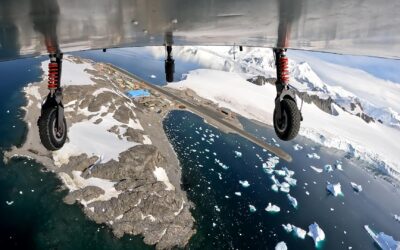
King Edward Point lies at the entrance to King Edward Cove, a small bay within Cumberland East Bay. Located midway along South Georgia it is approximately 1,400km (860 miles) from the Falkland Islands. Access is by boat or ship based helicopter.


Administration & Status

South Georgia is administered by the Government of South Georgia and South Sandwich Islands (GSGSSI). Based in Stanley, Falkland Islands, the government is represented locally at King Edward Point by a Government Officer. The British Antarctic Survey staff at King Edward Point provide logistic support assisting the Government Officer to carry out his duties plus the delivery of an agreed science plan (see Scientific Research).


Climate

The island of South Georgia (view map) is approximately 170km long and varies in width from 2 to 40km; its long axis lies in a north west to south east direction. Surrounded by cold waters originating in Antarctica, South Georgia has a harsher climate than expected from its latitude. More than half of the island is covered by permanent ice with many large glaciers flowing from the highest peaks making a sharp contrast to the green coastal belt of vegetation. The main mountain range, the Allardyce range, has its highest point at Mount Paget (2960m).

King Edward Point  station with rainbow - KEP station from King Edward Cove with rainbow

Protected by the surrounding mountains King Edward Point generally receives drier and calmer weather than that of much of South Georgia. Temperatures vary from −15°C to +20°C and although winter and summer seasons are well defined snow can fall on any day of the year. The island is typically snow covered from May to October. Brash ice from nearby glaciers and icebergs collect in Cumberland East Bay causing a hazard to boat navigation, and winter temperatures freeze the predominately fresh water layer covering King Edward Cove with a thin layer of ice that sometimes prevents local boating activities.

Latest Weather

Temperature Last Update Wind Speed Wind Direction
9.1°C 18 Mar 2010 at 01:00:00 14 knots 330 deg

Landscape

South Georgia is mountainous and glaciated with permanent snow and ice cover over much of the island. The coastal fringes become snow free during the summer months promoting the growth of lush vegetation over these areas.

Tussock grass South Georgia landscape

The research station is built on the foreshore of the narrow spit forming King Edward Point. The Point, consisting mainly of pebbles, protects the entrance to King Edward Cove providing sheltered waters within.

The low lying area immediately adjacent to the station is covered with tussock grass extending up the scree slopes of Mt Duse. Nearby valleys and hills are covered in low grasses and moss, this giving way to scree, rock and ice on the higher slopes.

The island was once the home of the whaling industry. Tens of thousands of whales were brought ashore to be rendered down for oil. Many of the beaches are littered with whalebones.


Wildlife

South Georgia has abundant populations of seabirds including penguins. Several sites are within walking distance of King Edward Point. During the summer the beach in front of the station becomes a breeding ground for Elephant seals. The Barff peninsula directly across Cumberland East Bay is a favourite area for King Edward Point staff to take recreational travel trips to view the reindeer, introduced by the whalers last century, and King penguins at St Andrew’s Bay.

Male and female elephant seals, Mirounga leonina, at King Edward Point, South Georgia. King penguin colony (Aptenodytes patagonicus) at St Andrews Bay, South Georgia. Reindeer, the largest terrestrial vertebrate introduced to sub-Antarctic South Georgia

Environmental Protection

BAS policy is to minimise our impact on the environment in which we work (see the BAS Environment Office). We take this responsibility seriously at King Edward Point and have introduced control measures, policy and procedures initiated by the GSGSSI and BAS. The BAS policies are in line with the GSGSSI Environmental Charter.

Rat reduction measures

Introduced accidentally from sealing and whaling ships, rats are common at King Edward Point and around mainland South Georgia where they have devastated populations of ground nesting birds. Around KEP measures are taken to reduce the rat population, good waste management procedures combined with traps and bait boxes lessen the risk of rats entering the station buildings. Ultrasonic rat scaring devices are deployed on the jetty thus reducing the risk of rats being carried and introduced in to rat-free areas of South Georgia. For the future the GSGSSI are investigating the feasibility of rat eradiction from part or all of South Georgia.

Preventing invasion of other non-native species

The sub-Antarctic climate of South Georgia is mild enough for foreign plants and animal species to survive. Dandelions, cow parsley and other non-native plants are already populating areas around the derelict whaling stations. At King Edward Point every care is taken to reduce the risk of further spreading these introduced species to other parts of the island and also ensure we do not introduce new alien species. Fresh produce is inspected and washed upon delivery, any non-native species found are sent to our headquarters in Cambridge for sample identification. New protocols ensure that upon arrival visitors scrub their footwear and inspect their clothing, particularly velcro in waterproofs to remove any visual signs of seeds and soils.


Scientific Research

On 22 March 2001 the Commissioner for the Government of South Georgia and the South Sandwich Islands opened the new applied fisheries research station at King Edward Point, South Georgia. The opening of the purpose built laboratory and accommodation facilities, which coincided with the withdrawal of the small British garrison from South Georgia, marked the return of biological research to King Edward Point after an absence of nearly 20 years following the Falklands conflict in 1982. BAS scientists are undertaking a programme of scientific research at the new facility under contract to the Government of South Georgia and the South Sandwich Islands (GSGSSI), which is aimed at providing sound scientific advice to assist in the sustainable management of the valuable commercial fisheries around the island.

Around 20 vessels registered in a number of countries including the UK (Falkland Islands), Chile, Uruguay, Spain and South Africa are licensed each year by GSGSSI to fish within South Georgia’s 200 nautical mile Maritime Zone. Currently three species are exploited commercially from the cold rich waters around South Georgia. A longline fishery for the Patagonian toothfish (Dissostichus eliginoides) takes place during the austral winter with catches of the Mackerel icefish (Chamsocephalus gunnari) taken by pelagic trawlers during the austral summer. Antarctic krill (Euphausia superba) are fished during the winter months as fishing grounds further south towards the Antarctic continent become icebound. Exploratory fisheries for both stone crabs (Paralomis spp.) and squid (Martialia hyadesi) have recently taken place within the South Georgia Maritime Zone and it is thought that unexploited stocks of these species have the potential to support new commercial fisheries.

Fishing activity around South Georgia is regulated by internationally adopted measures agreed by the Commission for the Conservation of Antarctic Marine Living Resources (CCAMLR). In contrast to other multilateral fisheries conventions, CCAMLR is concerned not only with the regulation of fishing, but also has a mandate to conserve the ecosystem. This ecosystem approach, which considers the whole Southern Ocean to be a suite of interlinked systems, distinguishes CCAMLR from other multilateral fisheries conventions. BAS scientists at King Edward Point are carrying out strategic research on many aspects of the biology and ecology of both the targeted resource species as well as dependent and by-catch species. This work will assist with the stock assessments and population modelling of target species currently conducted for the GSGSSI by the Marine Resources Assessment Group Ltd (MRAG), London and complement existing research conducted by BAS biologists in the Southern Ocean.

Investigations at KEP involve the analysis of specimens and data obtained from a number of sources. Collaboration with the CCAMLR scientific observer programme enables samples of target and by-catch species to be collected for analysis from the commercial fishery operating around South Georgia. Field research sampling the spawning adult population and larval distribution and abundance of the Mackerel icefish (C.gunnari) within the bays around KEP is to be conducted from the station’s workboat. In addition, fish surveys using chartered fishing or research vessels operating around South Georgia (such as the biennial trawl survey currently undertaken by collaboration between MRAG and BAS) involve scientists from the KEP laboratory. Such surveys are undertaken to assess the standing stock of icefish and juvenile toothfish but are also used to provide information and specimens of other target species such as stone crabs and non-target species e.g. skates, rays and grenadiers.


Station Facilities

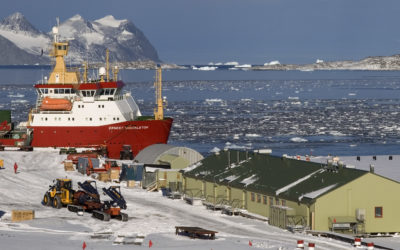
The purpose built research station at King Edward Point is comprised of two single storey buildings, the James Cook Laboratory and Everson House. The station is manned year round by two scientists and six support personnel, including two boating officers, doctor and base commander. The James Cook Laboratory building contains three separate laboratories, a refrigerated rough/wet laboratory, dry laboratory and an analytical laboratory. There is also a dedicated communications room, offices with excellent computing facilities, a walk-in freezer for specimen storage and a library. Everson House provides living quarters for all staff and provides comfortable accommodation for up to 18 people over the summer months. Between the buildings lies a large controlled temperature room which houses a re-circulating seawater holding facility for live specimens.

King Edward Point, Everson House - Everson House from beach with Mt Duse in background

Larsen House located nearby provides additional accommodation for up to 8 people. Used mainly during the busy summer months the building has offices, 4 twin en-suite bedrooms, kitchen and dining room. This building also houses the Macklin Medical centre consisting of a purpose built surgery, dispensary and consulting room.

The Government Officer lives in Carse House. Constructed in 2006 this building provides self contained accommodation for up to 6 people. Additional Government accommodation is provided in Shackleton Villa, a self contained 2 bedroom apartment located at one end of Everson House.

To support the Government’s administration of South Georgia, BAS operates five inshore boats from KEP. The boats are maintained in the purpose built boatshed that also contains workshops, standby electrical generators, and a net store.

Electrical power is supplied from a hydro-electric power station commissioned in December 2008.


Station Personnel

Typically King Edward Point station has 22 people living on station during the summer months and 13 people on station throughout the winter. Although the station can accommodate nearly 40 people numbers are kept to a more manageable level. The Government of South Georgia and South Sandwich Islands employ two Government officers (permanent and assistant) who live and work at King Edward Point on an overlapping rota basis (8 months work, 4 months leave). BAS staff consist of 2 fisheries scientists, 2 boating officers, 2 technicians (electrical and mechanical), a doctor and a Base Commander. The majority of the BAS staff complete 2.5 years on station (without leaving the island).


Life on Station

Everyone takes their turn to do the cleaning, cook evening meals and make bread on a daily rota. Traditionally a more formal 3 course meal is prepared for Saturday evenings. Training is provided in the UK prior to deployment to station. This is continued upon arrival and is essential in helping ensure the safety of station members. There are no mountain leaders so we provide comprehensive training in navigation and Search and Rescue techniques. The doctor provides first aid training and more advanced training in the use of the medical equipment. Remote medical support is available immediately upon request at all times. The team make their own entertainment, anything from discos, barbecues to half marathon running.


Further Information

  • Live pictures from South Georgia are available on the Official South Georgia website (courtesy Government of South Georgia and South Sandwich Islands.
  • South Georgia: Plan for Progress 2006 – 2010 (Dr Liz Pasteur and Prof David Walton, 2006)
  • Environmental Management Plan for South Georgia (E McIntosh, D W H Walton, 2000)
  • The Island of South Georgia (Robert Headland , 1985) — a comprehensive study of South Georgia and its islands